
ZIP 33030
Downtown and west Homestead
Downtown Homestead, historic district near Krome Avenue
See ZIP 33030Gutter cleaning means clearing the debris out of the trough, removing the buildup along the roof edge, and flushing the downspouts so water leaves the house. Fast Pro does it by hand, bags everything, and sends photos of the finished work to Homestead homeowners.
Serving Homestead, FL homeowners. 6+ years of experience. 450+ jobs completed. Last updated .
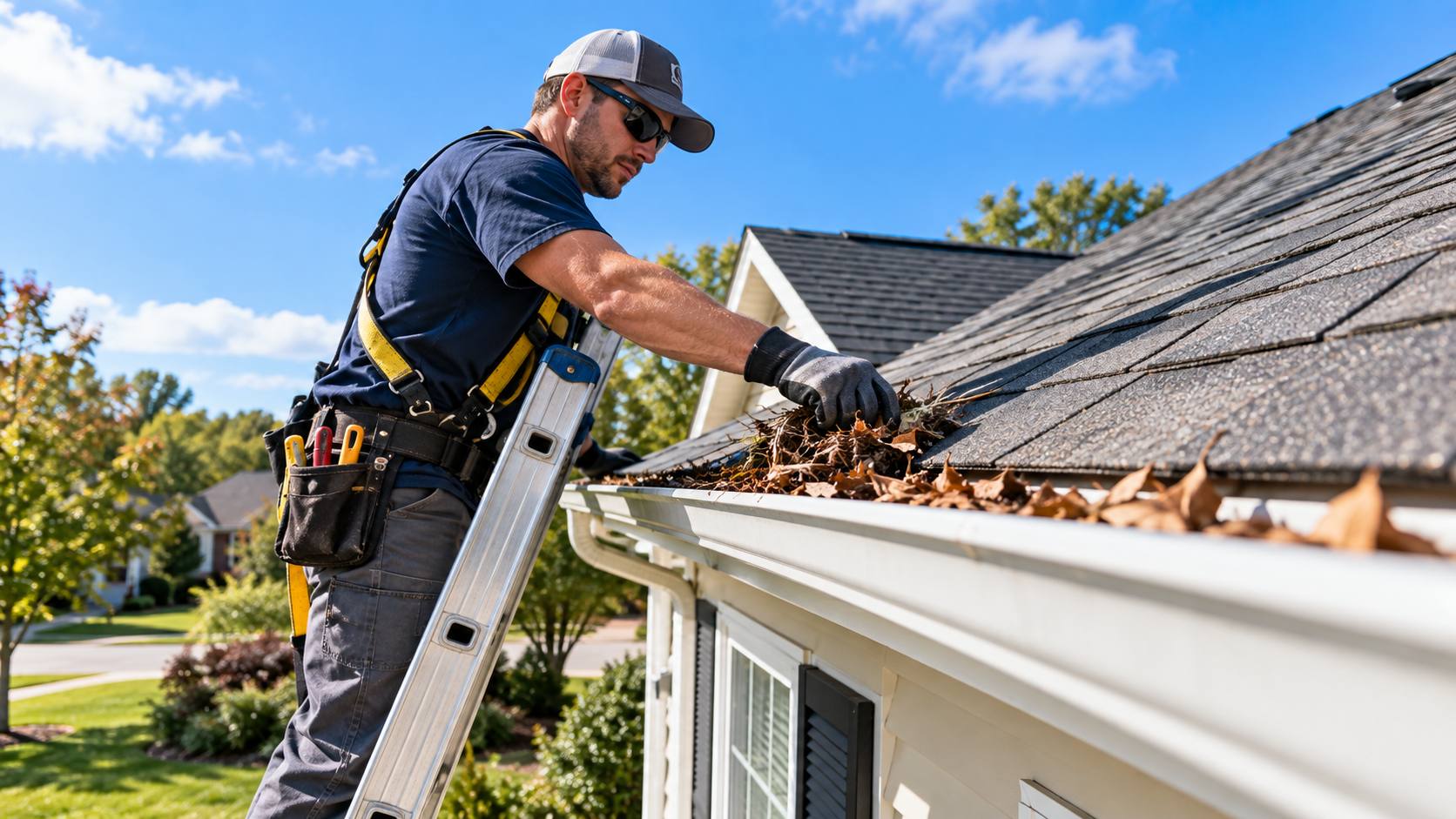
Every gutter cleaning includes
Free inspectionHomestead gutters catch mango and avocado leaves, palm fiber, blossoms and roof grit. We clear every run by hand, bag the debris, flush each downspout and photograph the result before we leave, so you see what came out.
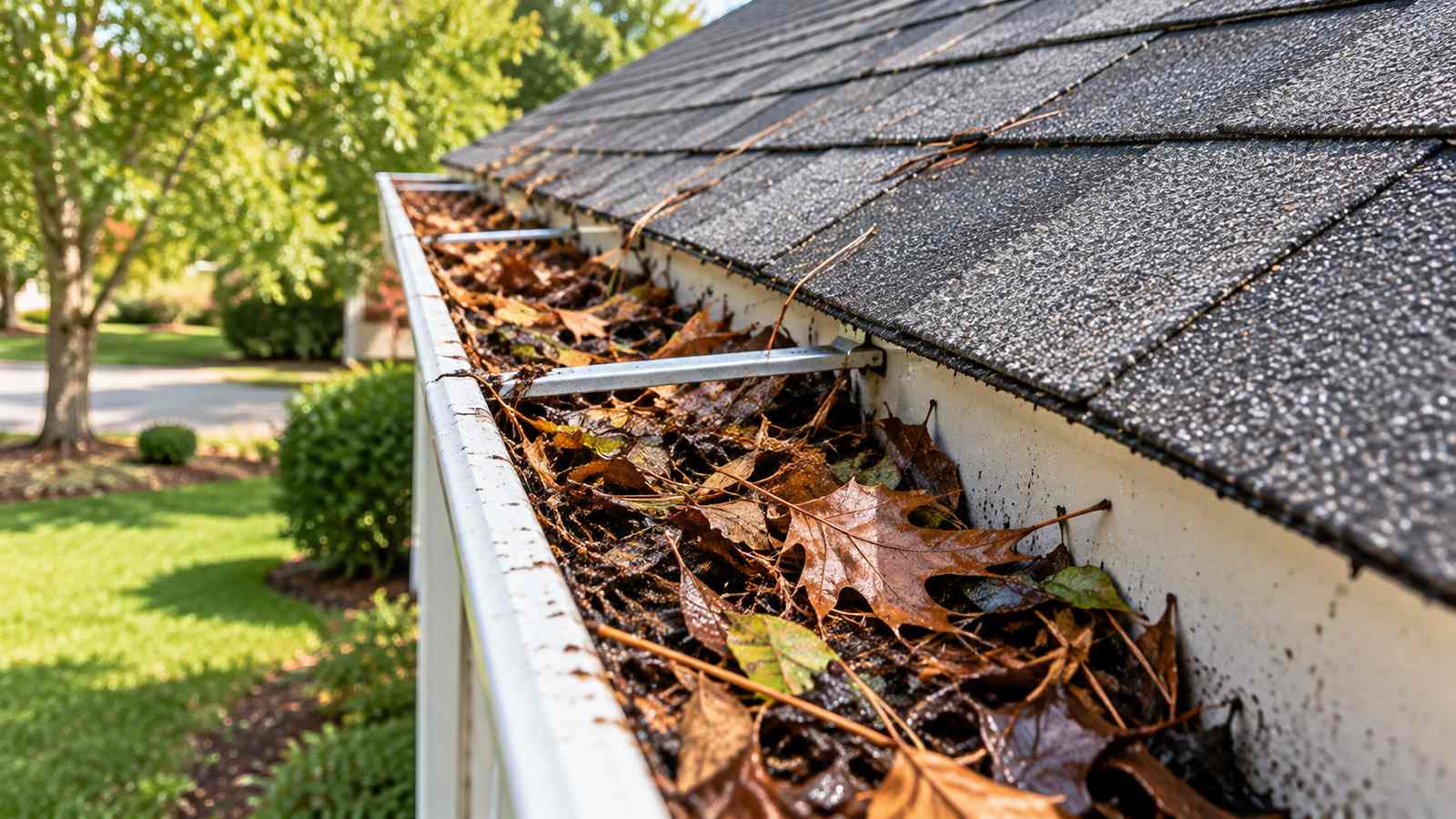
A gutter in Homestead rarely fills with one thing. Mango and avocado leaves, the long fronds and stringy fiber of royal palms, blossoms, small fruit and the grit that sheds off tile all land in the same trough. Wet leaves mat down, fiber catches on the mat, and grit settles under both. By the time water backs up at a corner, the blockage has been building for months.
Rain sets the schedule. Homestead averages 5.77 inches in May, 9.34 in June and 10.17 in August, so a run that is half full in early May overflows by midsummer. The visit that counts is the one in early May. A second visit between mid-October and December clears what hurricane season left behind, and a named storm that passes close is a reason for a quick check.
Homes beside groves and nursery lots collect more of everything, and so do houses under mature trees on the older streets near Krome Avenue. We look at what hangs over each roof before we price the visit, and we tell you if the trees justify a third visit.
We finish at the ground. Homestead sits about 3 feet above sea level, so water leaving a downspout has few places to go. We flush each downspout and watch where the stream ends up: against the slab, across a walkway or into the yard. If it pools at the wall, we say so.
Gutters collect different things depending on the trees around the house, the age of the roof, and the season.
| Debris | Where it comes from | Why it matters |
|---|---|---|
| Leaves and twigs | Trees overhead | They pack the trough and block the downspout outlet. |
| Seed pods and blooms | Flowering trees and shrubs | They rot into a heavy sludge that holds water. |
| Fibers and needles | Palms, pines, and grasses | They knot together and lodge at the first downspout elbow. |
| Pollen paste | Spring pollen mixed with rain | It dries into a crust on the floor of the trough. |
| Roof grit | Granules shed by asphalt shingles and tile | It hardens and slows drainage. |
| Nests and trash | Animals and wind | They block flow and hold standing water. |
Seven steps, in this order, on every house.
Ladders go on firm, level ground at the angle NIOSH recommends, with stabilizers on two-story homes.
Debris along the lower edge of the roof and in the valleys comes off first, so it does not wash into a clean trough.
Gloved hands and scoops clear the full length of the trough, including corners and end caps.
Everything that comes out goes into bags and into the truck. Nothing is left in your beds or on the lawn.
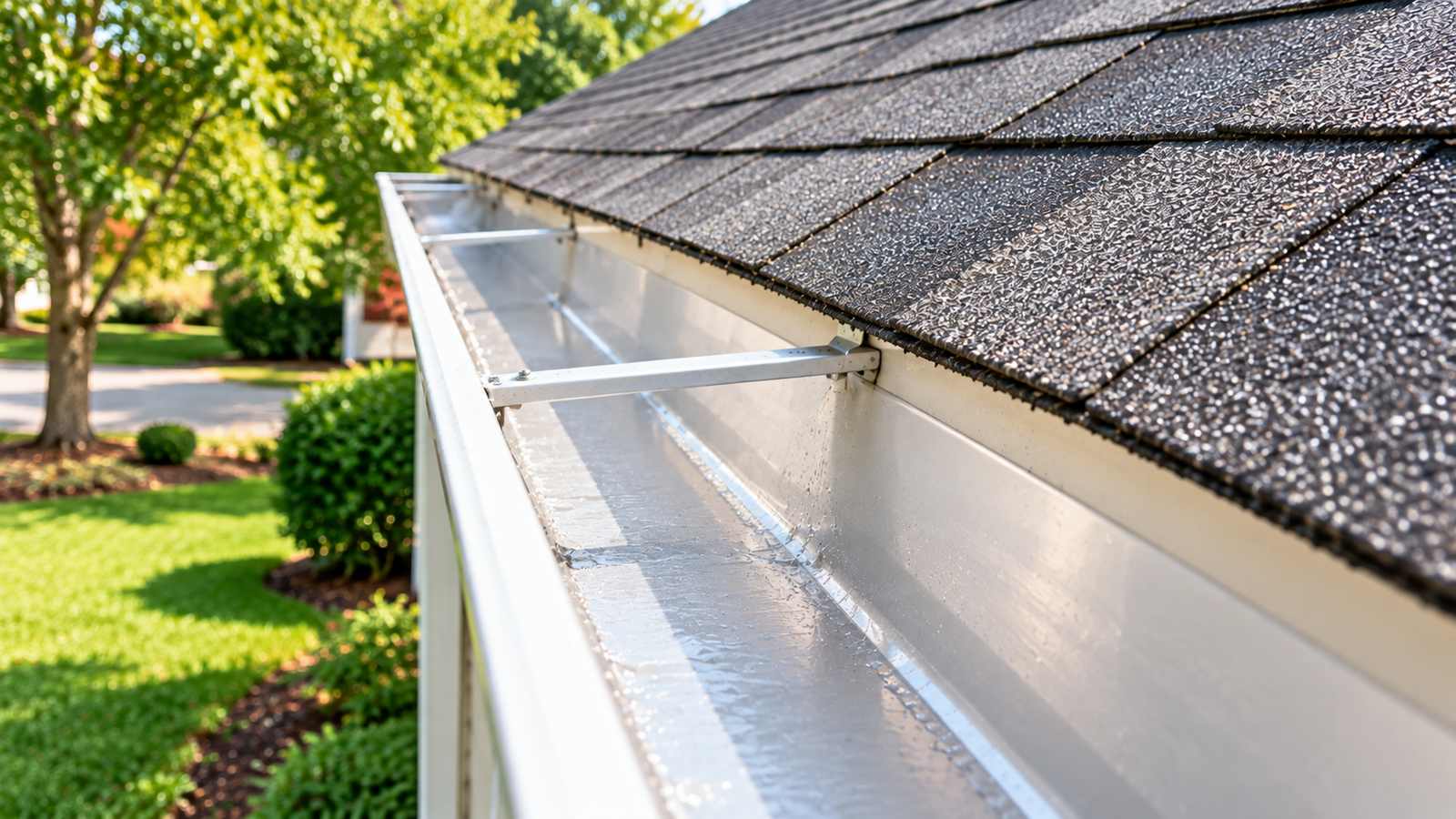
Water runs through each downspout until the flow is steady. A clear trough over a blocked downspout still overflows.
We look for loose hangers, leaking seams, and soft fascia behind the gutter, and photograph anything we find.
You get before and after photos and a plain note on what we saw.
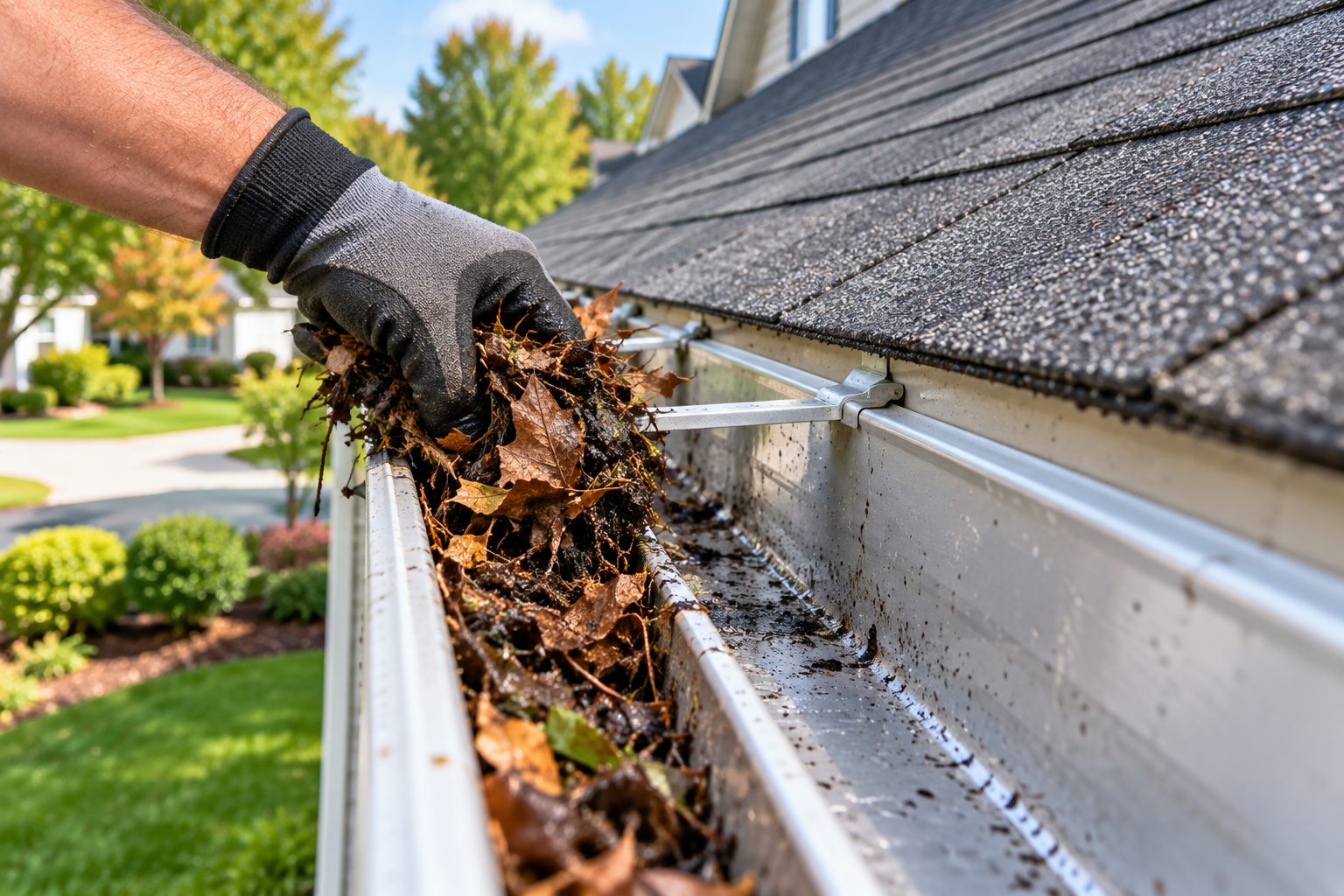
Every run is cleared by hand, then flushed with water.
The same run of gutter, photographed from the same spot before and after.
Pick your ZIP code to see the neighborhoods we cover, or call and we will confirm your street.
Downtown and west Homestead
Downtown Homestead, historic district near Krome Avenue
See ZIP 33030Redland
Redland
See ZIP 33031Leisure City and Naranja
Leisure City, Naranja, Naranja Lakes
See ZIP 33033North Homestead, Princeton and Naranja
Princeton, Naranja, north Homestead
See ZIP 33032South Homestead and the Florida City line
South Homestead, Florida City
See ZIP 33034Southeast Homestead and Florida City
Southeast Homestead, Florida City
See ZIP 33035Not sure we cover your ZIP code? Call us at (813) 856-2726.
The price depends on the feet of gutter, the number of stories, how packed the runs are and whether guards are installed. Homestead homes range from short runs over a front door to gutters around the full roofline. Call with your ZIP code and we quote by phone.
It depends on the roof size, the material, the pitch and how much algae is on it. A one-story concrete tile roof, a metal roof on a farmhouse and a two-story shingle roof are different jobs. Tell us the roof type and the stories and we quote by phone.
Early May, before rain climbs from 2.9 inches in April to 5.8 inches in May. A second visit between mid-October and December clears what hurricane season left. Homes under mango or avocado trees may need a third look in late summer.
Every two to three years suits most roofs. Slopes under trees go dark sooner.
Yes. After a named storm we move cleanups up the schedule, clear fronds, branches and leaf mats from the roof and the trough, and flush every downspout.
We clean houses and their roofs, including homes on large Redland lots. Packing houses, greenhouses and other commercial buildings are outside our work.
Pressure is the risk. Tile care guides cap cleaning pressure near 1,200 psi and warn that some cleaners etch concrete. On tile we soft wash with a compatible cleaner. On metal we keep pressure low and avoid scuffing the coating.
Twice a year at a minimum: early May and again between mid-October and December. Add a visit after a named storm and one more when trees overhang the roof.
Yes. Leaves drop all year and heavily after storms, and fallen blooms and fruit rot in the trough. Wet leaves mat into a layer that holds water.
Light rain moves slowly enough to squeeze past a partial blockage. A summer downpour delivers water far faster, and it goes over the edge at the clog.
Call and tell us your ZIP code and what the gutters look like. We quote it by phone and find a day that works.
Call (813) 856-2726